What Comes After AI Translation in Sports Broadcasting?
The Next Evolution of Fan Engagement Is Personalized Commentary
If AI can translate sports commentary into any language in real time, what comes next?
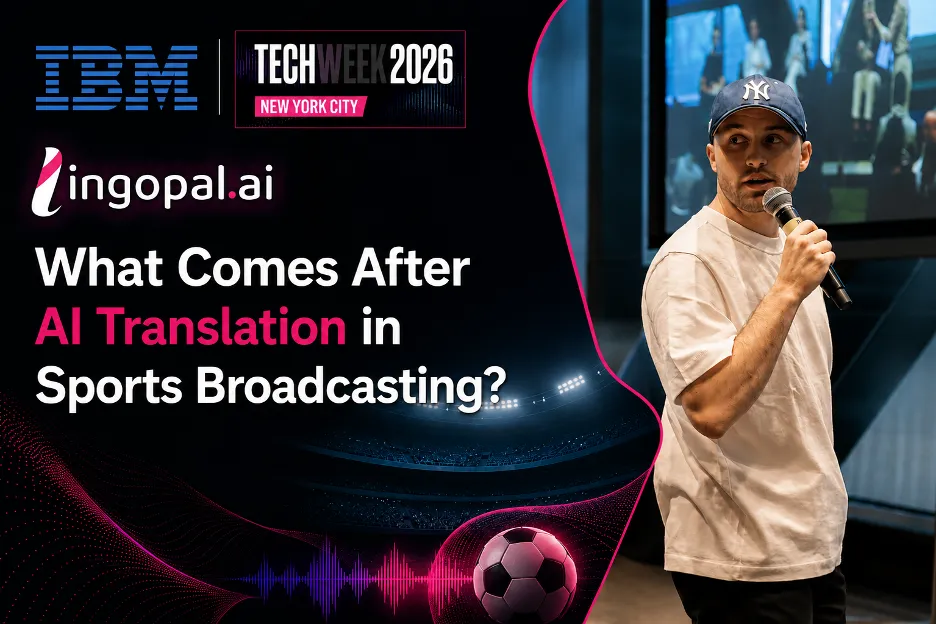
That was the question discussed by Lingopal CEO Casey Schneider during his presentation at IBM’s Sports Tech Founder Showcase during NY Tech Week, where he was selected as one of six sports technology founders to present in front of leaders from IBM, Comcast Ventures, USTA Ventures, and the broader sports, media, and AI ecosystem.
The answer may reshape the future of sports broadcasting.
While real-time AI translation has already helped broadcasters reach global audiences, the next major innovation is not simply multilingual broadcasting.
It is personalized broadcasting.
What Is Personalized Sports Commentary?
Personalized sports commentary is the ability to adapt live commentary based on an individual viewer’s preferences, language, culture, interests, and favorite teams.
Instead of delivering a single commentary feed to millions of viewers, broadcasters can create millions of unique viewing experiences from the same live event.
This means two fans watching the same match could hear entirely different commentary experiences.
One viewer may prefer deeper statistics and analysis.
Another may prefer storytelling and humor.
A fan in Japan may want more focus on Japanese athletes.
A fan in Brazil may care more about Brazilian players and regional storylines.
The game remains the same.
The viewing experience becomes personalized.
Why Is AI Translation No Longer Enough?
AI translation has solved one of the biggest challenges in global sports broadcasting: language accessibility.
Broadcasters can now reach international audiences without hiring large teams of commentators for every market.
However, language alone does not create engagement.
Sports fans connect with:
- Local culture
- Regional references
- Favorite athletes
- Historical rivalries
- Community narratives
- Personal interests
As broadcasters expand globally, they are discovering that translation is only the first layer of audience personalization.
The next challenge is relevance.
How AI Is Changing Sports Broadcasting
Artificial intelligence is enabling sports media organizations to move from one-size-fits-all broadcasts to audience-centric experiences.
Modern AI systems can already analyze:
- Live game action
- Player statistics
- Historical performance data
- Team information
- Viewer preferences
- Language requirements
- Cultural context
As these technologies continue to evolve, commentary can become increasingly tailored to each audience segment.
This creates new opportunities for:
Sports Leagues
Leagues can deliver more engaging experiences to international audiences while maintaining local relevance.
Broadcasters
Broadcasters can expand globally without sacrificing cultural connection.
Streaming Platforms
OTT and streaming services can increase viewer engagement through personalized experiences.
Advertisers
Brands can align messaging with specific audiences, regions, and fan communities.
What Does the Future of Sports Media Look Like?
The future of sports broadcasting will likely combine several technologies:
Real-Time AI Translation
Instant multilingual commentary for global audiences.
AI-Powered Localization
Content adapted for specific regions and cultures.
Personalized Commentary
Commentary styles tailored to individual viewers.
Dynamic Storytelling
Different narratives highlighted for different audiences.
Audience-Aware Broadcasting
Live content that adapts based on fan interests and engagement patterns.
The result is a shift from mass broadcasting to individualized experiences at scale.
Frequently Asked Questions
What is personalized sports broadcasting?
Personalized sports broadcasting uses artificial intelligence to customize commentary, storytelling, language, and content based on each viewer’s preferences and interests.
How is personalized commentary different from AI translation?
AI translation converts commentary into different languages. Personalized commentary goes further by adapting the style, focus, cultural references, and storytelling to specific audiences.
Why is personalization important in sports media?
Sports fans engage more deeply when content reflects their culture, favorite players, teams, and interests. Personalization helps broadcasters increase engagement and audience retention.
Can AI create different commentary feeds for different audiences?
Yes. Modern AI systems can generate multiple commentary variations based on language, region, audience preferences, and contextual data.
How will AI impact sports broadcasting in the future?
AI is expected to enable real-time translation, localization, personalized commentary, automated highlights, audience-specific storytelling, and enhanced fan engagement experiences.
The Future Is Personal
The sports broadcasting industry has spent decades optimizing how to reach millions of viewers at once.
The next decade may be defined by something entirely different:
Creating a unique experience for every viewer.
AI translation opened the door.
Personalization is what comes next.
As broadcasters, streaming platforms, leagues, and content owners look to engage increasingly global audiences, the organizations that combine translation, localization, and personalization will be best positioned to connect with fans everywhere.
Because the future of sports media is not just about speaking every language.
It’s about understanding every audience.