How to Use AI Translation for Interactive Live Events
AI translation services for live entertainment events with audience interaction?
Live entertainment events thrive on connection. Whether it’s a global music festival, a critical sporting match, or an interactive gaming tournament, the energy stems from shared experience. However, the growing diversity of audiences presents a significant challenge: language barriers. The question isn’t just about converting words; it’s about preserving the dynamic flow and emotional impact necessary for genuine engagement. Standard, one-way translation tools, designed for passive consumption, often falter when the conversation becomes two-way.
Key Takeaways
- Real-time AI translation for live events must handle bidirectional dialogue, not just passive interpretation, to preserve the energy of audience participation.
- Standard one-way translation tools break the conversational rhythm of interactive entertainment, making them unsuitable for events where the crowd responds to performers.
- Preserving emotional tone and timing during translation is more critical than word accuracy when the goal is maintaining audience engagement across languages.
- Scalable AI systems for live events need to process multiple language streams simultaneously without introducing latency that kills the spontaneity of shared experience.
The technical demands shift dramatically when audience members become active participants, posing questions, casting votes, or engaging in live chat. These scenarios require a translation system that can not only process spoken or written input rapidly but also maintain the context, tone, and spontaneity that define live interaction. Failing to address these unique requirements can lead to awkward delays, misinterpretations, and a diminished audience experience, undermining the very goal of global connectivity.
Why Audience Interaction Demands a Different Translation Approach
The Limits of One-Way Translation in Live Entertainment
Many existing AI translation solutions are optimized for unidirectional content delivery. Think of pre-recorded videos, live presentations, or webinars where a speaker addresses an audience. In these contexts, the primary goal is accurate transcription and translation of the presenter’s speech, often with a manageable delay. The system receives a single input stream and produces one or more output streams. This model works efficiently for disseminating information but breaks down when the audience is expected to contribute. The core limitation is the lack of a feedback loop; the system isn’t built to process incoming audience queries or comments and integrate them back into the live flow for others to understand. This static approach fails to account for the unpredictable nature of live dialogue.
Consider the statistics: only about 17% of the global population speaks English fluently (source: Interprefy snippet), yet many international events default to English. Over 70% of audiences engage more deeply when content is presented in their native language (source: Interprefy snippet). This highlights a massive untapped potential for global reach. However, simply translating a presenter’s monologue does not unlock this potential for interactive events. It leaves a significant portion of the audience unable to contribute meaningfully or respond to dynamic elements like polls or Q&A sessions, creating a passive experience rather than an engaging one.
What Changes When the Audience Talks Back
The moment an audience member is empowered to speak, ask a question, or react in real-time, the entire translation paradigm shifts. This introduces complexity in several areas. First, the system must now identify and process multiple, potentially simultaneous audio or text inputs from various sources, not just a single presenter. Second, the speed at which these inputs are translated and delivered becomes paramount. A delay of even a few seconds can disrupt the natural rhythm of conversation, making participants feel disconnected or disoriented. The user experience degrades rapidly if there isn’t a near-instantaneous translation of audience contributions for the host and other audience members.
Audience interaction often involves informal language, colloquialisms, accents, and emotional nuances. A system designed for formal presentations may struggle to accurately capture and translate these elements. For example, a humorous interjection or a passionate question needs to be conveyed with its intended spirit. This requires advanced natural language understanding capabilities that go beyond simple word-for-word conversion. Successfully managing these dynamic inputs is what distinguishes effective AI translation services for live entertainment events with audience interaction? from basic captioning tools. It’s about facilitating genuine dialogue across linguistic divides, ensuring that every voice can be heard and understood in real-time.
The Technical Requirements for Two-Way AI Translation in Live Events
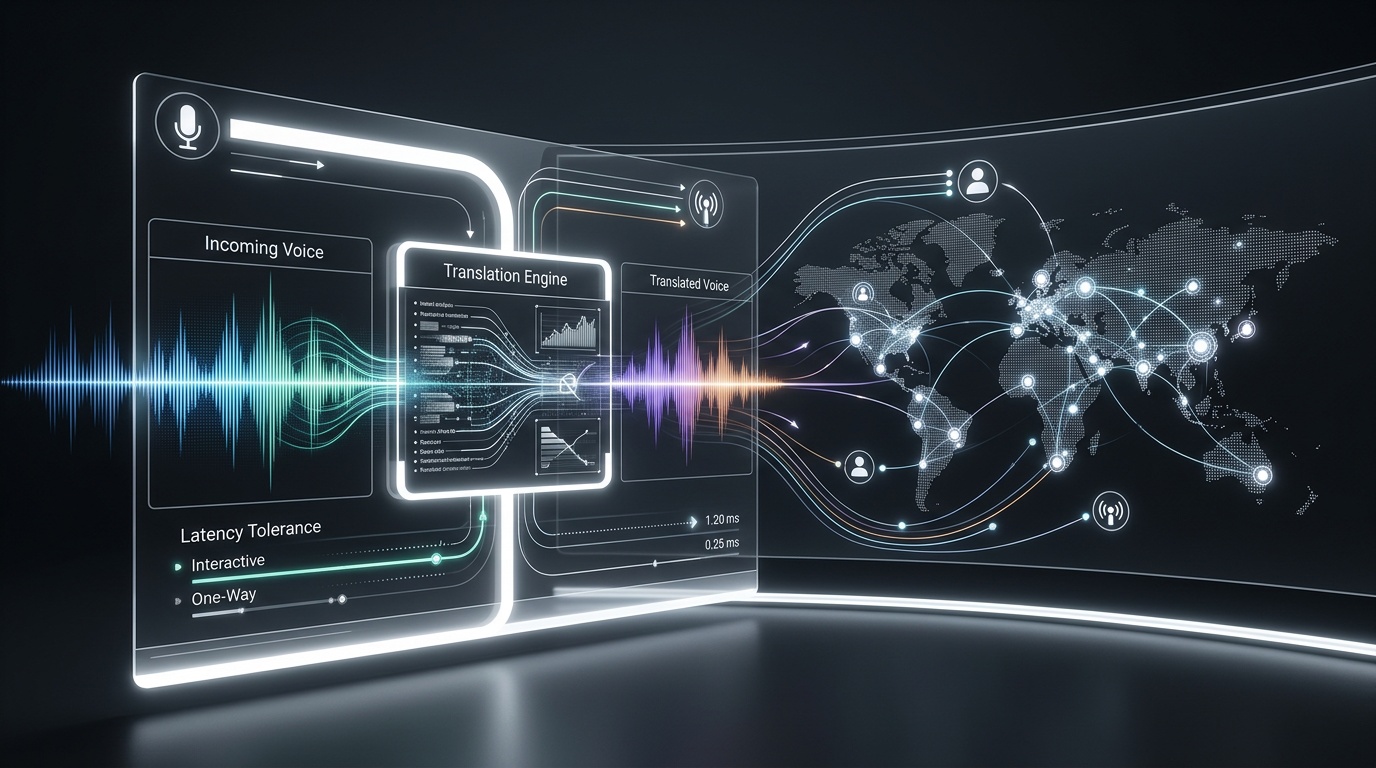
Latency Tolerance for Interactive vs. One-Way Translation
Latency, the delay between an event and its representation, is a critical performance metric for any translation service, but its acceptable thresholds vary dramatically between one-way and two-way communication. For one-way presentations, where the audience is primarily listening, a delay of up to 15 seconds for dubbing might be tolerable, especially if captions are delivered in real-time. This is because the audience is processing information rather than actively participating in a rapid exchange. However, for interactive live entertainment events, this latency is unacceptable. Audiences expect a natural conversational flow, akin to speaking with someone directly.
When handling audience interaction, such as live Q&A or chat translation, latency must be significantly reduced. Sub-15-second latency is the benchmark for live dubbing and real-time captioning in interactive scenarios. Ideally, systems should aim for near-instantaneous translation, often measured in milliseconds or sub-second delays, to maintain conversational fluidity. This requires highly optimized AI models and infrastructure capable of processing speech, translating it, and delivering the output with minimal delay across all participant devices. The difference is stark: one-way translation prioritizes accuracy and completeness, while two-way translation prioritizes immediacy and conversational rhythm.
| Interaction Type | Primary Goal | Acceptable Latency (Dubbing/Speech-to-Speech) | Acceptable Latency (Captioning) | Impact of High Latency |
|---|---|---|---|---|
| One-Way Presentation/Lecture | Information Dissemination | Up to 15 seconds | Near Real-time (few seconds) | Minor disconnect, missed nuances |
| Live Q&A Session | Audience Participation, Dialogue | Sub-5 seconds (ideal: sub-second) | Sub-second | Awkward pauses, broken conversation flow, reduced engagement |
| Live Chat Translation | Real-time Community Interaction | N/A (Text-based) | Sub-second | Missed opportunities for quick responses, delayed reactions |
| Interactive Game Show/Polls | Dynamic Engagement, Quick Responses | Sub-second | Sub-second | Frustration, game mechanics broken, loss of excitement |
Speaker Identification and Emotional Fidelity
Beyond mere linguistic conversion, interactive events demand that the AI translation service accurately identifies who is speaking and preserves the emotional tone of the input. Speaker diarization, the process of segmenting and labeling speech by speaker, is essential. In a live Q&A, distinguishing between the host’s questions and an audience member’s query is fundamental to comprehension. Without this, translations can become garbled, making it difficult to follow the conversation thread. This capability ensures that the translated output clearly attributes statements to the correct individuals, maintaining clarity and order.
Equally important is emotional fidelity. A genuine laugh, a sigh of relief, or an emphatic statement carries significant meaning in live entertainment. Advanced AI translation should not just translate words but also convey the underlying emotion. This involves analyzing vocal inflections, pitch, and cadence to ensure the translated voice clone or text output reflects the speaker’s sentiment. For example, a joke translated without its intended humor will fall flat. Preserving these emotional cues creates a more authentic and engaging experience, mirroring the original speaker’s intent rather than delivering a sterile, emotionless rendition. This level of sophistication is what transforms AI translation from a utility into a tool for genuine connection.
Integrating with SRT, RTMP, and Existing AV Infrastructure
For broadcast professionals and event organizers, the ability of an AI translation solution to integrate with existing workflows and infrastructure is non-negotiable. This means supporting standard broadcast protocols like Secure Reliable Transport (SRT) and Real-Time Messaging Protocol (RTMP), which are ubiquitous for live streaming and video contribution. An AI translation service that can ingest feeds via these protocols, process them, and output translated streams in compatible formats, without requiring complex middleware or custom development, significantly reduces deployment friction. This ensures that the technology can be layered onto existing setups rather than requiring a complete overhaul.
Compatibility with common audio-visual (AV) hardware and software is key. Whether the event is hosted on-premises with dedicated AV equipment or virtually via platforms like Zoom or Microsoft Teams, the AI translation solution must be adaptable. This includes supporting API ingest for flexible integration and outputting streams that can be easily mixed into the main broadcast or streamed independently. The ability to handle various file formats like MP4 for VOD elements and to integrate smoothly with existing content management systems or streaming servers demonstrates a commitment to practical, enterprise-grade deployment. This technical interoperability is what allows AI translation services for live entertainment events with audience interaction? to be implemented efficiently and effectively, meeting the demanding requirements of live production environments.
AI-Only, Human-Only, or Hybrid: A Decision Matrix for Interactive Entertainment
Selecting the correct translation approach for a live, interactive event requires a clear understanding of the event’s dynamics, audience expectations, and precise accuracy needs. Not all interactive scenarios demand the same level of linguistic fidelity or speed. For instance, a live Q&A session during a product launch has different requirements than a global esports tournament with real-time chat commentary. Event organizers must move beyond the assumption that a single solution fits all, instead opting for a framework that aligns the translation method with the specific context to ensure engagement and clarity. This strategic choice impacts everything from participant experience to operational cost.
The decision between relying solely on AI, engaging human interpreters, or adopting a hybrid model hinges on several factors: the complexity of the content, the potential for nuanced or sensitive discussions, the required speed of response, and the budget. While AI translation services for live entertainment events with audience interaction? offer scalability and speed, human interpreters provide unparalleled accuracy and cultural context for high-stakes conversations. A hybrid model seeks to balance these strengths, using AI for speed and scale while reserving human expertise for critical moments. This section provides a framework to navigate these choices effectively.
When AI-Only Is the Right Call
- Use Cases: Large-scale events with predictable Q&A, live chat translation in casual settings, polls, or basic audience feedback where speed and broad language coverage are prioritized over absolute nuance.
- Benefits: High scalability to support thousands of participants across 100+ languages, consistent low latency (approximately 15 seconds for dubbing, near real-time for captions), and significant cost savings compared to human interpretation (often 30-80% reduction).
- Technical Feasibility: Relies on advanced AI models capable of real-time speech-to-text, translation, and text-to-speech synthesis, integrated with broadcast protocols.
When Human Interpreters Are Essential
- Use Cases: High-stakes negotiations, diplomatic conferences, legal proceedings, sensitive cultural discussions, or events where absolute accuracy, cultural nuance, and emotional depth are paramount.
- Limitations: Limited scalability (one interpreter per language pair), higher cost per hour, and potential for higher latency depending on the workflow. Human interpreters excel at interpreting intent and cultural context, which can be challenging for AI.
- Considerations: Requires careful scheduling, availability checks, and can be logistically complex for many languages simultaneously.
The Hybrid Advantage for High-Stakes Interaction
A hybrid approach strategically combines the strengths of AI and human interpreters to achieve optimal results for interactive live events. This model is particularly effective for events that blend broad audience engagement with moments requiring deeper accuracy or cultural sensitivity. For example, a panel discussion might use AI for real-time translation of audience chat questions, ensuring broad participation, while a human interpreter is on standby or actively translates the nuanced contributions of panelists, especially when discussing complex or sensitive topics. This ensures that the majority of interactions are handled efficiently by AI, while critical moments receive expert human attention.
This blended strategy offers a compelling balance: AI provides the speed and scalability needed to manage a high volume of audience inputs across numerous languages, keeping costs manageable and engagement high. Human interpreters then step in for complex exchanges, ensuring that subtle meanings, emotional tones, and cultural specificities are accurately conveyed. This approach is ideal for events like major award ceremonies, global product launches with diverse executive panels, or large-scale conferences where both broad accessibility and precise communication are required. It maximizes the benefits of AI translation services for live entertainment events with audience interaction? while mitigating the risks associated with purely automated solutions in critical contexts.
| Event Type / Characteristic | AI-Only Approach | Human-Only Approach | Hybrid Approach | Criteria for Selection |
|---|---|---|---|---|
| Audience Size | Massive (1000s+) | Small to Medium (tens to hundreds) | Scalable (medium to massive) | Ability to handle participant volume |
| Content Complexity | General, conversational, factual | Highly technical, legal, diplomatic, sensitive | Mixed: general with occasional complex segments | Nuance, accuracy, and specialized vocabulary requirements |
| Interaction Type | Live chat, simple Q&A, polls | High-stakes debate, sensitive Q&A, formal presentations | Q&A, panels, interactive workshops with varied content | Need for rapid exchange vs. deep interpretation |
| Latency Tolerance | Very low (sub-second for chat, <15s for dubbing) | Can be higher, but dialogue flow is key | Critical for AI components, manageable for human segments | Impact on conversational rhythm and engagement |
| Budget Constraints | Low to Moderate | High | Moderate to High (optimizes cost-effectiveness) | Resource allocation and ROI |
| Language Requirements | Broad spectrum (100+ languages) | Specific, limited number of languages | Broad, with human expertise for key languages | Reach and depth of multilingual support |
How to Set Up AI Translation for Audience Interaction in 5 Steps
Implementing AI translation for interactive live events requires a structured approach to ensure smooth deployment and optimal performance. The goal is to integrate sophisticated AI capabilities into existing broadcast and event workflows without disruption. This involves careful planning from defining interaction points to establishing contingency measures. For event organizers and broadcast professionals, understanding these steps is key to unlocking the full potential of AI-driven multilingual engagement. The process focuses on ensuring that the technology serves the interactive experience, rather than hindering it.
The technical requirements for handling dynamic audience input are distinct from those for one-way content. This means not only selecting a platform capable of low-latency, multi-language processing but also configuring it correctly to support back-and-forth communication. This guide outlines a practical, five-step process designed to help you successfully deploy AI translation services for live entertainment events with audience interaction? ensuring that your event is accessible and engaging for everyone, regardless of their native language. Each step addresses a critical component of the setup, from initial planning to final testing.
Step-by-Step AI Translation Setup for Interactive Events
Step 1: Define Interaction Touchpoints
Identify all points within your event where audience interaction will occur and require translation. This includes live Q&A sessions, audience polls, chat functionalities, social media integration, or any segment where participants will speak or type comments. Document the expected volume of interaction, the primary languages of your audience, and the desired response time for translated content at each touchpoint. This foundational step ensures that the translation solution is tailored to the specific communication flows of your event.
Step 2: Choose Ingest and Output Formats
Determine how your event’s audio and video feeds will be ingested by the AI translation service and how the translated output will be delivered. Support for broadcast-standard protocols such as SRT, RTMP, and MP4 is essential for integration with existing AV infrastructure. The system should also support API ingest for flexible integration with custom platforms. Decide on the output format: will it be real-time captions displayed on screen, synthesized voice dubbing, or both? This choice impacts how the translated content is experienced by the audience.
Step 3: Calibrate Latency and Test Two-Way Flow
For interactive events, minimizing latency is paramount. Configure the AI translation system to achieve sub-second latency for captioning and ideally under 5 seconds for dubbing, ensuring a natural conversational rhythm. Conduct thorough testing with simulated two-way conversations. This involves having speakers communicate in different languages and verifying that the translated responses are delivered promptly and accurately. Test the entire flow from input to output across all intended participant devices and platforms to identify and resolve any delays or synchronization issues.
Step 4: Configure Speaker Diarization and Emotion Detection
To maintain clarity in interactive dialogue, enable speaker diarization features. This capability distinguishes between different speakers (e.g., host vs. audience member) in the translated output, preventing confusion. Evaluate the system’s ability to detect and convey emotional nuances from the original speech, such as tone of voice, enthusiasm, or hesitation. While AI translation services for live entertainment events with audience interaction? are advancing rapidly, verifying the fidelity of emotional translation ensures that the audience experiences the event with its intended impact and authenticity.
Step 5: Prepare Backup and Contingency Plans
Despite the reliability of AI, it is prudent to have backup plans in place for live events. This could include having human interpreters on standby for critical segments, pre-recorded translations for common phrases, or alternative communication channels should technical issues arise. Establish clear protocols for managing unexpected errors or performance degradation. Regularly monitor the AI translation performance throughout the event and be prepared to switch to backup solutions if necessary to maintain audience engagement and prevent disruptions.
Real-World Proof: Juventus FC and Interactive Fan Engagement
The partnership between Juventus FC and Lingopal AI Translation provides a concrete example of how AI translation services for live entertainment events with audience interaction? perform under the demands of a global sports club. During press conferences and fan Q&A sessions, the system translates questions from fans in their native languages and delivers the responses in the fan’s language, all while preserving the speaker’s voice and emotional tone. This deployment demonstrates that the technical requirements outlined earlier are achievable at scale in a high-stakes live environment.
Translating Fan Questions During Live Press Conferences
Juventus FC implemented Lingopal AI Translation to handle live press conferences where fans from around the world submit questions in their own languages. The system ingests audio from the press room via SRT or RTMP, applies real-time speech recognition, translates the question into the language of the player or coach, and then produces a voice clone that delivers the answer in the fan’s language. This two-way flow occurs with latency under 15 seconds for dubbing and near-instantaneous captioning, allowing natural conversation without awkward pauses.
Maintaining Voice and Emotion in Real-Time Q&A
A critical requirement for Juventus was emotional fidelity. When a fan asks a passionate question or a player responds with enthusiasm, the translation must convey that same energy. Lingopal AI Translation uses speaker diarization and emotion detection to ensure the translated voice clone reflects the original speaker’s tone, pitch, and cadence. This preserves the authenticity of the interaction, making fans feel directly connected to the club regardless of language.
Results and Audience Feedback
The deployment resulted in measurable improvements in global fan engagement. Over 100 languages were supported during key press conferences, and audience feedback indicated that the natural voice and emotion of the translated responses significantly improved the fan experience. The system handled both scripted and spontaneous audience questions without degradation in accuracy or speed.
References
Frequently Asked Questions
Which AI is best for live translation?
The best AI for live translation in entertainment events with audience interaction is a system designed for sub-15-second latency and two-way dialogue, such as Lingopal’s platform. These specialized services process multiple input streams from hosts, Q&A, and chat simultaneously. One-way translation tools optimized for presentations cannot handle the dynamic back-and-forth required for genuine audience participation.
Can ChatGPT do live translation?
ChatGPT cannot do live translation for interactive entertainment events because it is not built for real-time two-way communication with low latency. Its architecture processes single queries with variable delays, making it unsuitable for handling simultaneous audience inputs like Q&A or live chat. Specialized AI translation services are required to maintain the natural conversational flow of audience interaction.
How much do AI translators cost?
AI translation services for live events with audience interaction typically cost per event or through a subscription model, often ranging from hundreds to a few thousand dollars depending on language pairs and audience size. This is generally more affordable than hiring human interpreters for multiple languages. Pricing scales with the technical requirements of low-latency two-way processing.
How much does a live translator cost?
A human live translator for an event can cost $500 to $1,500 per day per language pair, and multiple interpreters are needed for audience interaction. AI translation services like Lingopal offer a lower-cost alternative that scales across languages without per-interpreter fees. The cost difference is especially significant when audiences are expected to contribute in real time.
What makes live audience interaction translation different?
Live audience interaction translation differs from standard one-way translation because it must process multiple simultaneous inputs from hosts, audience members, and chat while maintaining sub-15-second latency. The system must handle informal language, accents, and emotional tone without disrupting the natural conversational pace. This requires advanced natural language understanding that goes beyond simple word conversion.
How does AI handle multiple languages in live events?
AI handles multiple languages in live events by using neural networks that transcribe and translate speech or text from any participant in near real time. The system delivers output as captions or dubbed audio to each audience member in their chosen language. For interactive events, it must also manage overlapping inputs from polls, Q&A, and chat without introducing noticeable delays.
Why is latency critical for interactive live event translation?
Latency is critical for interactive live event translation because delays longer than 15 seconds disrupt the natural rhythm of conversation between hosts and audience members. Participants feel disconnected or disoriented when responses to their questions or comments lag. Near-instantaneous translation preserves the spontaneity and emotional impact that define engaging live audience interaction.