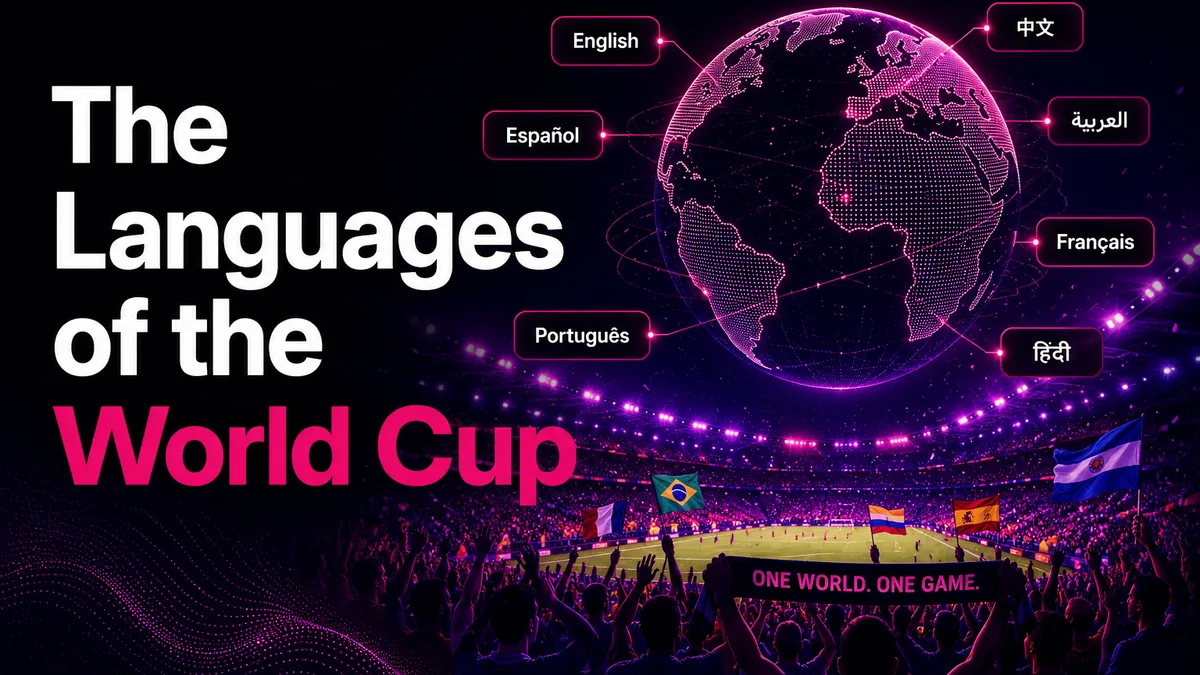
World Cup Languages: How Many Languages Are Spoken During the World's Biggest Sporting Event?
Quick Answer
The FIFA World Cup 2026 will feature 48 national teams, 104 matches, and billions of viewers across every continent. While there is no official count of languages represented, the tournament reaches audiences speaking hundreds of languages and dialects, including many of the world’s most spoken languages such as English, Spanish, Portuguese, Arabic, French, Hindi, Mandarin Chinese, German, Japanese, Korean, Dutch, and Italian.
For broadcasters, streaming platforms, sports leagues, and media companies, the World Cup is one of the largest multilingual media events ever created.
Why Is Language So Important During the World Cup?
The World Cup is no longer just a football tournament.
It is a global media ecosystem.
Every match generates:
- Live broadcasts
- Streaming content
- Social media clips
- Press conferences
- Player interviews
- Podcasts
- News coverage
- Fan-generated content
And every piece of content needs to reach audiences who speak different languages.
The challenge is no longer producing content.
The challenge is making content accessible.
How Many People Speak the Languages Represented at the World Cup?
Many of the most widely spoken languages on Earth are represented by participating nations, host countries, broadcasters, journalists, and fans.
The World’s Most Spoken Languages
| Language | Estimated Speakers Worldwide |
|---|---|
| English | 1.5+ billion |
| Mandarin Chinese | 1.18+ billion |
| Hindi | 609+ million |
| Spanish | 558+ million |
| French | 310+ million |
| Arabic | 330–420+ million |
| Portuguese | 264+ million |
| Bengali | 280+ million |
| Russian | 255+ million |
English remains the most widely spoken language globally when native and second-language speakers are combined, while Mandarin Chinese has the highest number of native speakers.
Combined, these languages represent more than 5 billion people worldwide.
That means a single World Cup goal can instantly become a conversation shared by most of humanity.
What Languages Are Most Important for World Cup Broadcasting?
For international broadcasters, the highest-demand languages typically include:
Tier 1 Global Languages
- English
- Spanish
- Portuguese
- French
- Arabic
These languages alone reach audiences across dozens of countries and hundreds of millions of football fans. English is an official language in more than 50 countries, French in over 25 countries, and Spanish is one of the most influential languages in global sports media.
Fast-Growing Sports Media Languages
- Hindi
- Mandarin Chinese
- Japanese
- Korean
- Indonesian
- Turkish
As streaming expands globally, broadcasters increasingly localize content for emerging and growing sports audiences.
Regional and Indigenous Languages
An often-overlooked opportunity is reaching audiences through regional and indigenous languages.
Many World Cup nations represent significant linguistic diversity:
- Nigeria: 500+ languages
- South Africa: 12 official languages
- India: hundreds of languages and dialects
- Mexico: dozens of recognized indigenous languages
- Argentina: at least 40 indigenous languages documented by researchers
The Hidden Language Challenge of the World Cup
Most people think about match commentary.
Broadcasters think about everything else.
A World Cup content strategy may require translating:
- Live commentary
- Post-match analysis
- Press conferences
- Social media clips
- Highlights
- Sponsor content
- Player interviews
- Podcasts
- OTT and FAST channels
- Fan engagement experiences
A single tournament can create thousands of hours of content.
Now multiply that by dozens of languages.
Why Broadcasters Are Searching for AI Translation During the World Cup
The rise of global streaming has changed how sports content is consumed.
Broadcasters increasingly search for solutions like:
Popular Search Questions
- How do you translate live sports commentary?
- Can AI dub sports broadcasts in real time?
- How can broadcasters reach international audiences?
- How many languages should sports content support?
- What is the best live translation solution for sports?
- How can streaming platforms localize live events?
- How do you provide multilingual captions during live matches?
- Can AI translate press conferences automatically?
- How can sports leagues increase global fan engagement?
- How do broadcasters scale translation without increasing costs?
These are no longer future questions.
They are operational challenges happening right now.
The Future of Sports Broadcasting Is Multilingual
Recent developments during the World Cup have highlighted the importance of language accessibility.
In June 2026, FIFA expanded translation support for Spanish across all World Cup press conferences after concerns from media and journalists, reinforcing how critical language access has become during major tournaments.
This trend reflects a broader industry shift.
Sports organizations increasingly recognize that language is directly connected to:
- Audience growth
- Viewer engagement
- Accessibility
- Fan retention
- International expansion
- Sponsorship value
The future of sports broadcasting is not simply global.
It is multilingual.
World Cup Language Facts Most Fans Don’t Know
- The 2026 World Cup is the first tournament to feature 48 teams and 104 matches.
- More than 7,000 languages are spoken worldwide today.
- English is spoken by approximately 1.5 billion people globally.
- Spanish is one of the most influential languages in global football media and journalism.
- A single World Cup broadcast can simultaneously reach viewers across dozens of language markets.
- AI translation can now help broadcasters deliver live content in 100+ languages from a single feed.
Frequently Asked Questions
How many languages are spoken during the World Cup?
There is no official number, but the tournament reaches audiences speaking hundreds of languages and dialects worldwide.
What is the most spoken language among World Cup audiences?
English and Spanish are typically the most widely used international languages across media coverage, while Mandarin Chinese and Hindi represent some of the largest language populations globally.
Why do broadcasters translate World Cup content?
Translation helps broadcasters expand audience reach, improve accessibility, increase viewer engagement, and serve international fans more effectively.
Can AI translate live football matches?
Yes. Modern AI solutions can provide live translation, multilingual captions, AI dubbing, and localized sports experiences in near real time.
How many languages should sports broadcasters support?
The answer depends on audience geography, but many organizations now support dozens of languages to maximize global reach.
One Tournament. Hundreds of Languages. Billions of Fans.
The World Cup may be the world’s most global sporting event.
But its most impressive statistic isn’t 48 teams.
It isn’t 104 matches.
And it isn’t billions of viewers.
It’s the fact that one tournament can unite people speaking hundreds of different languages through a shared passion for sport.
When the world is watching, language should never be the barrier.
Ready to Reach More Fans in More Languages?
Lingopal helps broadcasters, streaming platforms, sports leagues, federations, and content creators make live and on-demand sports content accessible in 120+ languages through:
- ✓ Live AI Translation
- ✓ AI Dubbing
- ✓ Multilingual Captions
- ✓ Real-Time Sports Localization
- ✓ Press Conference Translation
- ✓ OTT & FAST Channel Localization
- ✓ Global Fan Engagement Solutions
Want to see how live sports can be translated into 120+ languages from a single feed?
Schedule a demo and discover how Lingopal helps organizations reach global audiences without creating separate production workflows for every language. https://lingopal.ai/schedule-demo