Best Live Translation APIs for Streaming 2026
Best enterprise live translation APIs for streaming platforms integrating multilingual audio in 2026
The Imperative for Live Multilingual Audio in 2026 Streaming
Broadcasting in a single language is a self-imposed ceiling on growth. By 2026, the expectation for localized content has shifted from a premium feature to a baseline requirement for any platform seeking global scale. Audiences no longer tolerate the friction of subtitles for high-intensity live events like sports or breaking news. They demand the immediacy of audio in their native tongue. Implementing the Best enterprise live translation APIs for streaming platforms integrating multilingual audio in 2026 allows rights holders to unlock Tier 2 and Tier 3 markets without the prohibitive overhead of traditional dubbing studios.
Key Takeaways
- Platforms that limit themselves to one language cap their audience growth, and by 2026 viewers expect live audio in their native tongue as a default.
- Real-time translation APIs eliminate the high costs and long turnaround times of traditional dubbing studios, making smaller markets financially viable.
- Audiences will abandon streams that force subtitles during fast-paced live events, so low-latency audio translation is critical for user retention.
- The enterprise APIs reviewed here deliver the sub-second latency and accuracy needed for sports and breaking news where every second counts.
- Integrating these APIs lets streaming companies expand to multiple languages without hiring separate production teams for each region.
The Best enterprise live translation APIs for streaming platforms integrating multilingual audio in 2026 must provide sub-20-second latency, support for SRT and HLS protocols, and high-fidelity voice cloning to maintain brand identity. Solutions like Lingopal AI Translation deliver these capabilities through specialized neural architectures designed specifically for the rigors of live broadcast environments rather than general-purpose text translation.
Expanding Global Reach: Beyond Geographic Borders
Market penetration in 2026 depends on removing linguistic barriers at the point of ingestion. When a streaming service provides real-time audio localized for Southeast Asia or Latin America, it captures viewership that previously relied on pirate streams or localized social media clips. This expansion is not merely about headcount; it is about increasing the average revenue per user (ARPU) by making the primary broadcast product accessible to a wider demographic. Technical leaders must view translation as a core component of their distribution stack, ensuring that the signal path accommodates multiple audio PIDs for diverse linguistic regions.
Viewer Engagement: The Native Language Advantage
Retention metrics prove that viewers stay longer when the content is delivered in their primary language. While captions provide accessibility, they distract from the visual elements of a high-production broadcast. Multilingual audio allows the viewer to focus on the action, creating a more immersive experience. This engagement translates directly into higher ad completion rates and lower churn. Using Lingopal AI Translation, platforms can offer this immersion without the delay associated with human interpretation, keeping the global conversation synchronized across all regions.
Regulatory and Accessibility Demands
International broadcast regulations are increasingly stringent regarding accessibility. In many jurisdictions, providing a localized audio description or translated feed is becoming a legal mandate for large-scale streaming entities. Failure to comply results in significant fines and restricted market access. Integrating a professional translation API ensures that your platform meets these compliance standards automatically, generating both live captions and dubbed audio from a single source feed to satisfy diverse regulatory bodies simultaneously.
Strategic Insight: The Cost of Latency
In live streaming, every second of delay increases the risk of social media spoilers. If your translated audio lags more than 20 seconds behind the source, the value of the “live” experience evaporates. Prioritize APIs that optimize for throughput and minimal processing overhead.
Lingopal’s Foundational Approach: Purpose-Built for Broadcast
General-purpose AI tools often fail in live environments because they cannot handle the sustained data rates of a 4K broadcast or the nuances of specialized terminology. Lingopal addresses this by utilizing models trained on domain-specific datasets. This ensures that technical jargon in a medical conference or the rapid-fire commentary of a football match is translated with linguistic precision. Our focus remains on the operational realities of the broadcast booth, where reliability and speed are the only metrics that matter.
Evaluating Enterprise Live Translation APIs: Core Technical Criteria

Selecting the Best enterprise live translation APIs for streaming platforms integrating multilingual audio in 2026 requires a rigorous assessment of the underlying infrastructure. It is not enough to look at a list of supported languages. Engineering teams must evaluate how the API handles packet loss, how it manages clock synchronization between the video and the synthetic audio, and how it scales during peak concurrent viewership. A failure in the translation layer is a failure of the entire broadcast, making technical stability the primary selection factor.
Latency: The Real-Time Bottleneck for Live Broadcasts
Latency is the most significant hurdle in real-time dubbing. The process involves speech-to-text, machine translation, and text-to-speech synthesis, each adding milliseconds to the chain. The Best enterprise live translation APIs for streaming platforms integrating multilingual audio in 2026 keep this total processing time under 15 to 20 seconds. This window allows for buffer management while ensuring the translated audio feels synchronous with the on-screen action. Anything beyond this threshold creates a disjointed experience that alienates the audience.
Accuracy and Linguistic Fidelity: Beyond Word-for-Word
Literal translation often misses the cultural context or technical specificity required for a professional broadcast. High-fidelity APIs use Large Language Models (LLMs) to understand the intent behind the words. This allows for idiomatic expressions and correct terminology usage in specialized fields. Accuracy is measured not just by word count, but by the preservation of the original message’s meaning. For enterprise users, this means fewer errors in critical information and a more natural-sounding output that retains the authority of the original speaker.
| Technical Metric | Standard Requirement | Lingopal Performance |
|---|---|---|
| End-to-End Latency | 30-60 Seconds | ~15 Seconds |
| Language Support | 20-30 Languages | 100+ Languages |
| Ingest Protocols | RTMP Only | SRT, HLS, RTMP, MP4, API |
| Audio Output | Monotone TTS | Cloned Voice/Emotion Detection |
Voice Cloning and Brand Consistency: Preserving Identity
The personality of a commentator or a CEO is a key asset. Traditional text-to-speech sounds robotic and erodes the emotional connection with the audience. Advanced APIs now offer voice cloning, which analyzes the source audio to replicate the speaker’s timbre, pitch, and cadence in the target language. This ensures that the brand’s identity remains consistent across every localized feed. When the audience hears a familiar voice, even in a different language, the perceived quality of the production increases significantly.
Language Pair Coverage: Strategic Market Penetration
A narrow focus on common languages like Spanish or French is no longer sufficient for global enterprises. The Best enterprise live translation APIs for streaming platforms integrating multilingual audio in 2026 provide deep coverage across 100 or more languages, including regional dialects. This breadth allows organizations to target emerging markets with precision. Strategic planning involves identifying which language pairs offer the highest return on investment and ensuring the chosen API can support those specific needs without requiring custom model training for every new region.
Integration Protocols: Workflow Adoption
An API is only as useful as its ability to integrate with existing broadcast hardware and software. Support for Secure Reliable Transport (SRT) is mandatory for low-latency contribution over the public internet. Additionally, the ability to handle HLS and RTMP ensures compatibility with standard content delivery networks (CDNs). Enterprise workflows require a “no-code” or “low-code” ingest capability where the translation layer sits transparently between the source and the distribution point, minimizing the need for additional engineering resources during setup.
Lingopal’s Differentiated Offering: Generative AI for Broadcast-Grade Translation
The Best enterprise live translation APIs for streaming platforms integrating multilingual audio in 2026 must move beyond basic translation to provide a comprehensive audio experience. Lingopal AI Translation differentiates itself by focusing on the specific needs of live media production. Our technology is designed to handle high-stakes environments where there is no room for error. By combining rapid processing with sophisticated vocal modeling, we provide a solution that meets the rigorous standards of global broadcasters and enterprise communication departments alike.
LiveStream: Near-Instantaneous Dubbing and Real-Time Captions
Our LiveStream product is engineered for speed. It generates both real-time captions and dubbed audio simultaneously from a single input feed. This dual-output capability simplifies the technical stack and reduces costs. With approximately 15 seconds of latency, the translated audio remains tightly coupled with the live event. This performance is achieved through optimized model weights and a distributed cloud infrastructure that processes audio packets at the edge, closer to the source and the viewer.
Technical Advantage: The Power of Dual Output
Generating both captions and dubbed audio from a single processing pipeline eliminates synchronization errors. If the caption reads “Goal!” at the exact same millisecond the dubbed audio says “¡Gol!”, the viewer experience feels native. Lingopal’s architecture guarantees this alignment by processing the source audio once and distributing the outputs to their specific tracks.
Preserving Vocal Nuance: The Power of Authentic Voice Cloning
Generic synthetic voices erode the production value of a high-stakes broadcast. Lingopal AI Translation utilizes advanced voice cloning to replicate the original speaker’s unique timbre and pitch in the target language. This technology captures the specific characteristics of a commentator’s voice, ensuring that the localized feed maintains the same emotional weight and authority as the original. For enterprise clients, this consistency is a non-negotiable requirement for brand protection.
The technical process involves analyzing a short sample of the source speaker’s voice and applying those acoustic properties to the generated target language audio. This prevents the “uncanny valley” effect often associated with automated dubbing. By preserving the vocal identity across more than 100 languages, organizations can maintain a consistent global presence without hiring separate voice actors for every market they enter.
Speaker and Emotion Detection: Contextualizing the Broadcast
Live events are defined by shifts in emotional intensity. A standard translation API might convert words accurately but fail to convey the urgency of a breaking news alert or the excitement of a game-winning point. Lingopal’s models incorporate speaker diarization and emotion detection to adjust the prosody of the synthesized speech. This ensures that the translated audio reflects the same urgency or calm as the original speaker, providing a layer of contextual accuracy that basic transcription-to-speech models cannot achieve.
This capability is particularly relevant for panel discussions or interview-based content where multiple speakers interact. The system identifies who is speaking and maintains the distinct vocal characteristics for each participant. This level of detail transforms a simple translation into a broadcast-ready product that respects the nuances of human interaction and the dynamics of the original recording environment.
Unrivaled Language Support and Scalability (100+ Languages)
Scalability in 2026 requires support for a massive array of linguistic pairs. Lingopal supports over 100 languages, covering major global markets and niche regional dialects. This extensive coverage allows a single API integration to serve a global audience without the need for multiple vendors. The infrastructure scales horizontally, meaning that adding a new language pair does not degrade the performance or increase the latency of the existing streams.
Enterprise deployments benefit from this breadth by simplifying their vendor management and technical debt. Instead of managing different providers for different regions, a single integration with Lingopal handles the entire global requirement. This centralized approach ensures uniform quality control and simplifies the monitoring of broadcast health across all distributed feeds.
The Juventus FC Case Study: Real-World Performance Validation (Feb 2026)
In February 2026, Juventus FC utilized Lingopal’s LiveStream product to provide real-time multilingual commentary for a global audience. The implementation successfully delivered low-latency dubbed audio to fans across multiple continents, demonstrating the system’s ability to handle high-velocity sports terminology and emotional peaks. This deployment validated the API’s stability under the extreme pressure of a live, global sporting event with millions of concurrent viewers.
The success of the Juventus implementation provides a benchmark for other enterprises. It proved that automated dubbing could meet the quality standards of professional sports broadcasting. By using Lingopal AI Translation, the club was able to engage with its international fanbase in their native languages without the logistical nightmare of coordinating human translators in a live stadium environment.
Strategic Implementation: Architecting Your Multilingual Live Stream
Implementing a multilingual live stream requires more than just selecting an API; it demands a strategic approach to infrastructure. Engineering teams must evaluate their current content delivery network (CDN) capabilities to ensure they can handle multiple audio tracks simultaneously. The goal is to create a workflow where the translation is an invisible layer, processed at the edge and inserted into the manifest file without manual intervention. This architectural foresight prevents bottlenecks when traffic spikes during major global events.
Pre-Deployment Technical Checklist
- Verify SRT and HLS ingest compatibility with your current encoding stack.
- Calculate bandwidth requirements for multi-track audio distribution.
- Establish latency benchmarks for each target language pair.
- Configure API authentication and rate limiting for peak concurrency.
- Test voice cloning samples for all primary on-screen talent.
Assessing Latency Tolerance for Your Specific Content Format
Different types of content possess different latency tolerances. A live sports broadcast requires the translated audio to be as close to real-time as possible, ideally within the 15-second window Lingopal provides. Conversely, a corporate town hall or a live shopping event might tolerate slightly higher latency if it ensures higher translation accuracy. Defining this tolerance is the first step in configuring the API’s processing parameters, balancing speed against linguistic fidelity based on the specific use case.
Mapping Language Pairs to Target Audiences and Revenue Streams
Strategic implementation involves mapping language pairs to specific business objectives. If the goal is to increase market share in Southeast Asia, prioritizing Thai, Vietnamese, and Indonesian language support is essential. The API should allow for dynamic enabling or disabling of language tracks based on the geographic distribution of the audience. This data-driven approach ensures that computing resources are allocated to the languages that drive the highest return on investment, rather than a blanket approach to localization.
Integrating with Existing Streaming Infrastructure: API-First Approach
A purpose-built broadcast API must offer an API-first design that integrates with existing media asset management (MAM) and playout systems. Lingopal’s architecture supports direct ingest via SRT, HLS, RTMP, and MP4 formats, as well as raw API calls. This flexibility allows developers to embed translation capabilities directly into their custom broadcast workflows. The integration should be designed to failover gracefully; if the translation layer experiences an issue, the primary audio feed remains uninterrupted for the viewer.
Beyond Translation: Enhancing Accessibility with Multi-Speaker Routing
Modern translation APIs offer features that go beyond simple word conversion. Multi-speaker routing allows the system to identify individual voices and route them to specific processing queues. This is critical for maintaining clarity in debate-style content or panel discussions. By isolating speakers, the API can apply specific voice cloning models to each individual, ensuring that the translated output retains the distinct identity of every participant in the broadcast.
Cost Models for Enterprise: Per-Hour, Per-Language, and Volume Commitments
Enterprise budgeting for live translation requires a clear understanding of usage-based pricing. Most professional APIs utilize a model based on minutes of audio processed or the number of languages rendered. Lingopal provides transparent volume commitments that allow enterprises to scale their spending in line with their viewership growth. Understanding these cost structures is essential for calculating the total cost of ownership (TCO) and ensuring that the multilingual expansion remains profitable over the long term.
Future-Proofing Your Broadcast: Advanced AI Capabilities in 2026
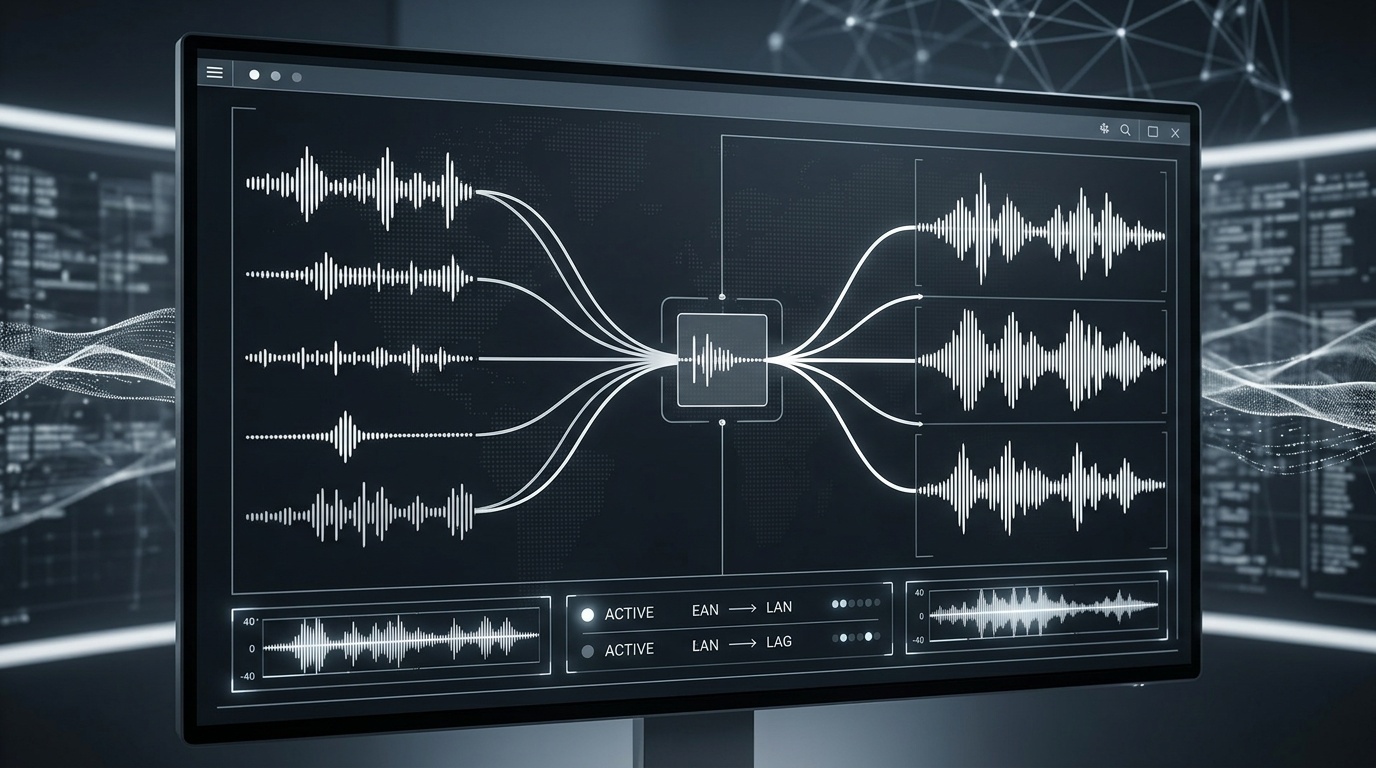
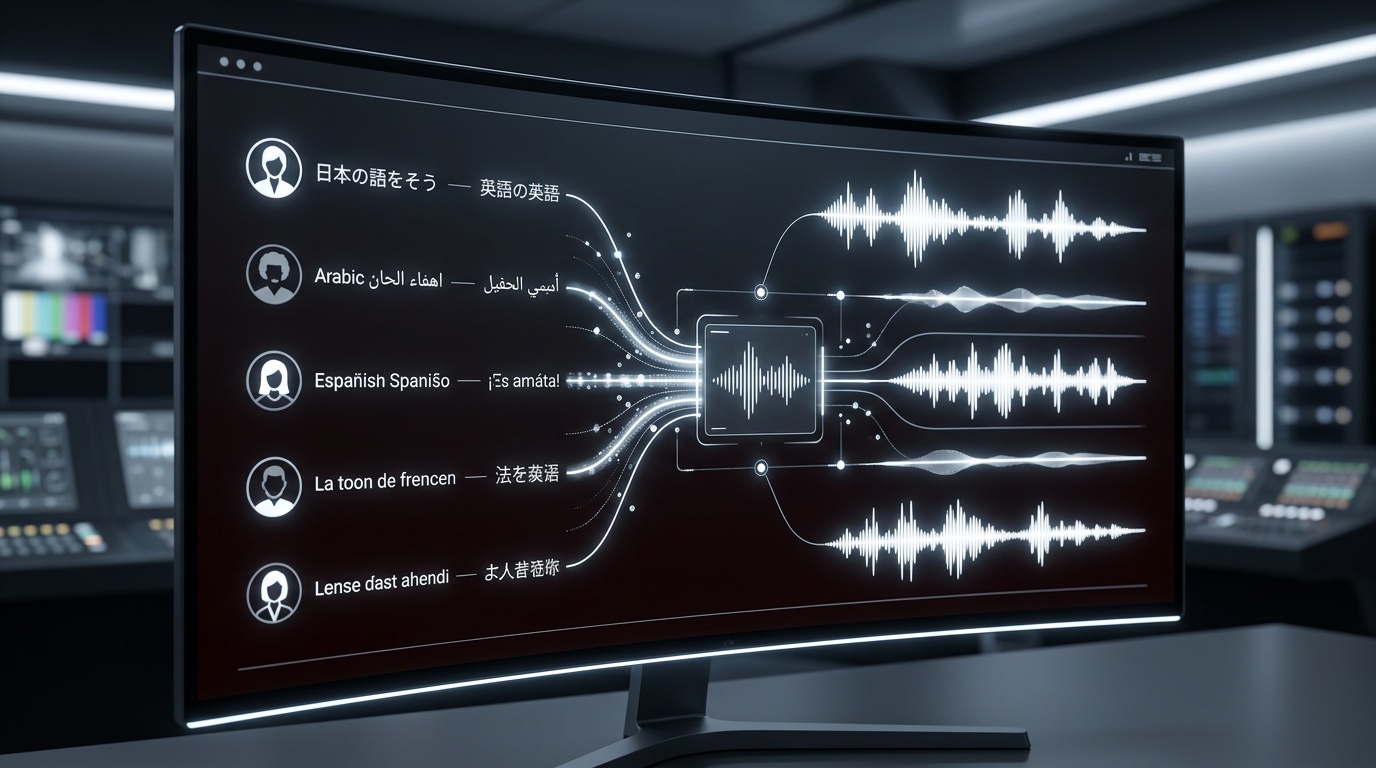
The Best enterprise live translation APIs for streaming platforms integrating multilingual audio in 2026 are those that anticipate the evolution of viewer behavior. As adaptive bitrate technologies become more sophisticated, the translation layer must also become more dynamic. Future-proofing involves selecting a partner that invests in research and development, particularly in the areas of contextual AI and low-latency processing. The goal is to ensure that today’s integration remains compatible with tomorrow’s delivery formats.
Adaptive Audio and Dynamic Language Switching
The next frontier in streaming is adaptive audio, where the language track switches automatically based on the viewer’s device settings or IP geolocation. This requires the API to work in tandem with the manifest file to provide multiple language options in a single stream. Lingopal’s infrastructure is designed to support this dynamic switching, allowing a viewer in Tokyo to hear Japanese commentary while a viewer in Paris hears French, all from the same primary source feed without requiring separate streams.
The Role of LLMs in Contextual Understanding and Idiomatic Translation
Large Language Models (LLMs) are transforming translation by providing the context necessary for idiomatic accuracy. In 2026, the most effective APIs use LLMs to recognize when a speaker is using a metaphor, a sports idiom, or a cultural reference. Instead of a literal translation that might confuse the audience, the LLM suggests an equivalent phrase in the target language that carries the same connotation. This level of sophistication is what separates a broadcast-grade translation from a basic utility.
Ensuring Data Security and Compliance in Enterprise Deployments
Enterprise broadcast content is often sensitive. Ensuring that the translation API complies with data protection regulations like GDPR or CCPA is mandatory. Lingopal’s architecture ensures that source audio and translated text are processed in secure environments with strict data retention policies. For enterprises, this means the ability to deploy multilingual capabilities without compromising the security of their intellectual property or their viewers’ privacy. Compliance is not an afterthought; it is a foundational element of the API’s design.
Why Purpose-Built Broadcast APIs Outperform General-Purpose Tools
Pros
- Optimized for low-latency, high-throughput broadcast environments.
- Support for industry-standard protocols (SRT, HLS) natively.
- Voice cloning and emotion detection for high-fidelity output.
- Scalable infrastructure designed for millions of concurrent viewers.
Cons
- Requires specific technical expertise to configure ingest protocols.
- Higher initial integration focus compared to simple text APIs.
- Dependent on high-quality source audio for optimal voice cloning.
The Lingopal Advantage: Enterprise-Grade Reliability at Scale
Choosing the right technology partner is the final step in future-proofing your broadcast strategy. Lingopal AI Translation offers a specialized solution that addresses the unique challenges of live media. By focusing on the intersection of generative AI and broadcast engineering, we provide a platform that is both powerful and practical. Our commitment to maintaining approximately 15 seconds of latency while supporting over 100 languages ensures that your content remains competitive in the fast-paced global market of 2026 and beyond.
The reliability of the Lingopal engine is proven in scenarios where failure is not an option. From congressional hearings to international sports fixtures, our technology delivers consistent, high-quality audio that meets the demands of the most discerning audiences. For enterprises looking to lead in the multilingual streaming space, the choice of API is a defining decision. Identifying the Best enterprise live translation APIs for streaming platforms integrating multilingual audio in 2026 requires looking beyond the hype to the underlying technical performance and operational stability.
References
Frequently Asked Questions
What is the best AI live interpreter platform for streaming in 2026?
The leading AI live interpreter platforms for streaming are purpose-built for broadcast environments, not general-purpose tools. In 2026, the best enterprise live translation APIs for streaming platforms integrating multilingual audio in 2026 need to deliver sub-20-second latency, support for SRT and HLS protocols, and high-fidelity voice cloning. Solutions like Lingopal AI Translation are designed specifically for these operational realities.
Can ChatGPT perform live translation for streaming platforms?
ChatGPT is a conversational AI that can translate text, but it cannot handle the sustained data rates of a live broadcast or the tight latency requirements for real-time dubbing. Streaming platforms need a specialized translation API that processes speech-to-text, machine translation, and text-to-speech within 15 to 20 seconds, which general-purpose tools like ChatGPT do not support.
What is the best translation API for live multilingual audio?
The best translation API for live audio must meet strict technical criteria: end-to-end latency under 20 seconds, accurate domain-specific translations, and support for streaming protocols like SRT and HLS. In 2026, Lingopal is a top option because it uses models trained on broadcast datasets to handle specialized terminology and rapid commentary without losing meaning.
Which technology automates translating and managing multilingual content in live streaming?
Automated translation for live streaming relies on a pipeline of speech recognition, machine translation using Large Language Models, and text-to-speech synthesis delivered through a dedicated API. Platforms integrate these components to generate real-time dubbed audio and captions from a single source feed, meeting both audience expectations and regulatory accessibility demands.
Will AI replace live human interpreters for broadcast events?
AI will not fully replace human interpreters for high-stakes events that require cultural nuance and real-time judgment, but it will handle the majority of scalable live translation. For streaming platforms, AI APIs provide the speed and consistency needed for multiple languages simultaneously, while human interpreters remain available for premium or sensitive broadcasts.
How does latency affect the quality of live translated audio in streaming?
Latency is the critical bottleneck: if translated audio lags more than 20 seconds behind the source, the live experience suffers and social media spoilers become a risk. The best enterprise live translation APIs for streaming platforms integrating multilingual audio in 2026 keep total processing time under 15 seconds to ensure synchronization with on-screen action and maintain viewer engagement.