Live Stream Translation AI: Platforms for 100+ Languages
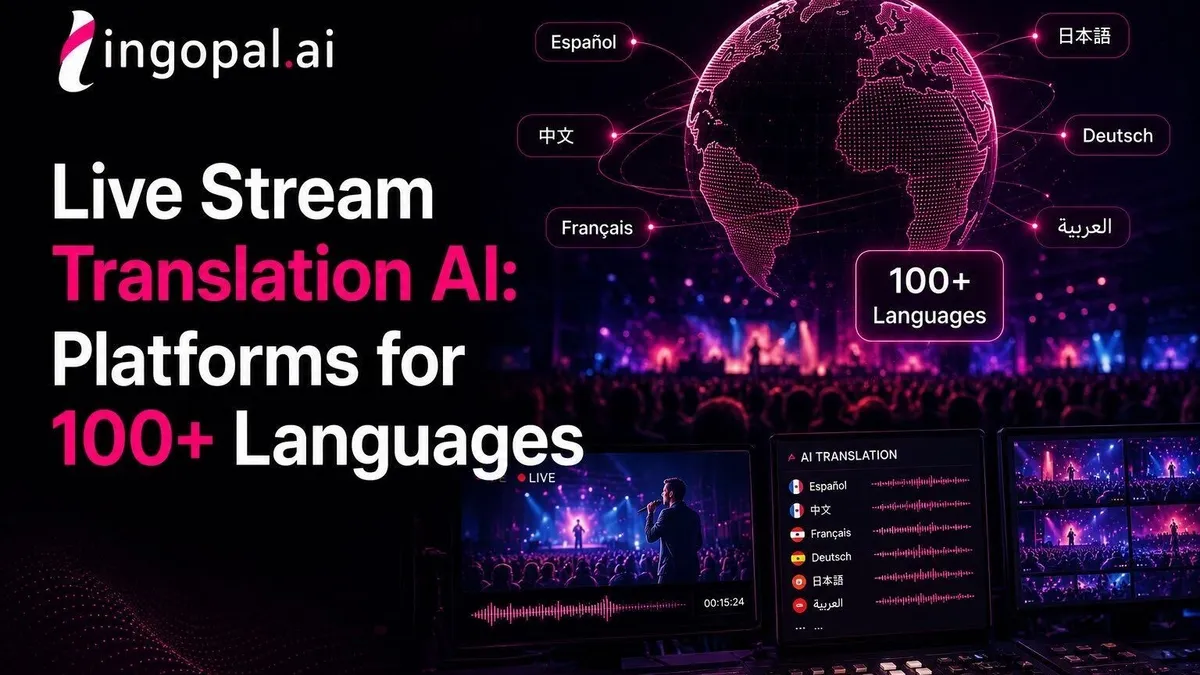
Best AI platforms for translating live streaming content into 100+ languages simultaneously in 2026
Broadcast teams evaluating AI platforms for translating live streaming content into 100+ languages simultaneously must move beyond marketing claims. The decision rests on three technical pillars: latency profiles that match production tolerances, verified language coverage that includes low-resource dialects, and ingest formats that slot directly into existing encoder and CDN pipelines without custom development. Lingopal’s Live AI Translation offers enterprise-grade performance across these critical areas.
Key Takeaways
- Latency profiles must match production tolerances; translation engines that add more than a two-second delay break the live viewer experience.
- Verified language coverage should extend beyond popular dialects to low-resource languages, because broadcasters lose credibility when a listed language fails on air.
- Ingest formats that plug directly into existing encoder and CDN pipelines eliminate costly custom development work and shorten deployment timelines.
- Evaluating these three technical pillars together, rather than cherry-picking a single metric, separates enterprise-grade platforms from marketing hype.
What Broadcast Engineers Must Verify Before Deploying Live AI Translation
Latency tolerance: live dubbing vs. real-time captioning
Live dubbing requires a specific latency window to maintain lip-sync awareness while allowing the neural network to process context. Lingopal’s LiveStream product delivers approximately 15 seconds of latency for live dubbing, a duration proven to balance translation quality with broadcast timing. Real-time captioning operates differently, generating synchronized text with minimal delay to support accessibility requirements. Both outputs originate from a single input feed, eliminating the need for separate processing chains. Engineers must confirm that the platform can sustain this dual-output latency profile under variable network conditions without dropping frames or desynchronizing audio.
Language coverage and simultaneous multi-language output
The capability to translate into 100+ languages simultaneously distinguishes enterprise-grade systems from limited alternatives. Broadcast operations often require parallel output for diverse global audiences, such as streaming a sporting event to viewers in Europe, Asia, and the Americas concurrently. Leading AI platforms for translating live streaming content into 100+ languages simultaneously must support this multi-language concurrency without degrading audio quality or increasing latency per language pair. Verification should include testing the specific dialect variations required for target markets, as generic models often fail to capture regional nuances that impact viewer engagement.
Ingest format compatibility and integration into existing workflows
Integration friction can derail a deployment faster than technical limitations. The platform must accept standard broadcast ingest formats, including SRT, HLS, RTMP, and MP4, along with API-based ingestion for custom workflows. This flexibility ensures the solution connects to existing encoders, switchers, and content delivery networks without requiring middleware or custom code. Engineers should verify that the API supports webhook callbacks for state management and that the ingest pipeline handles packet loss gracefully. A true zero-code integration reduces deployment time from weeks to hours.
Live AI Translation Platform Capabilities: Feature Comparison for Broadcast Operations
Languages, latency, and simultaneous multi-language output
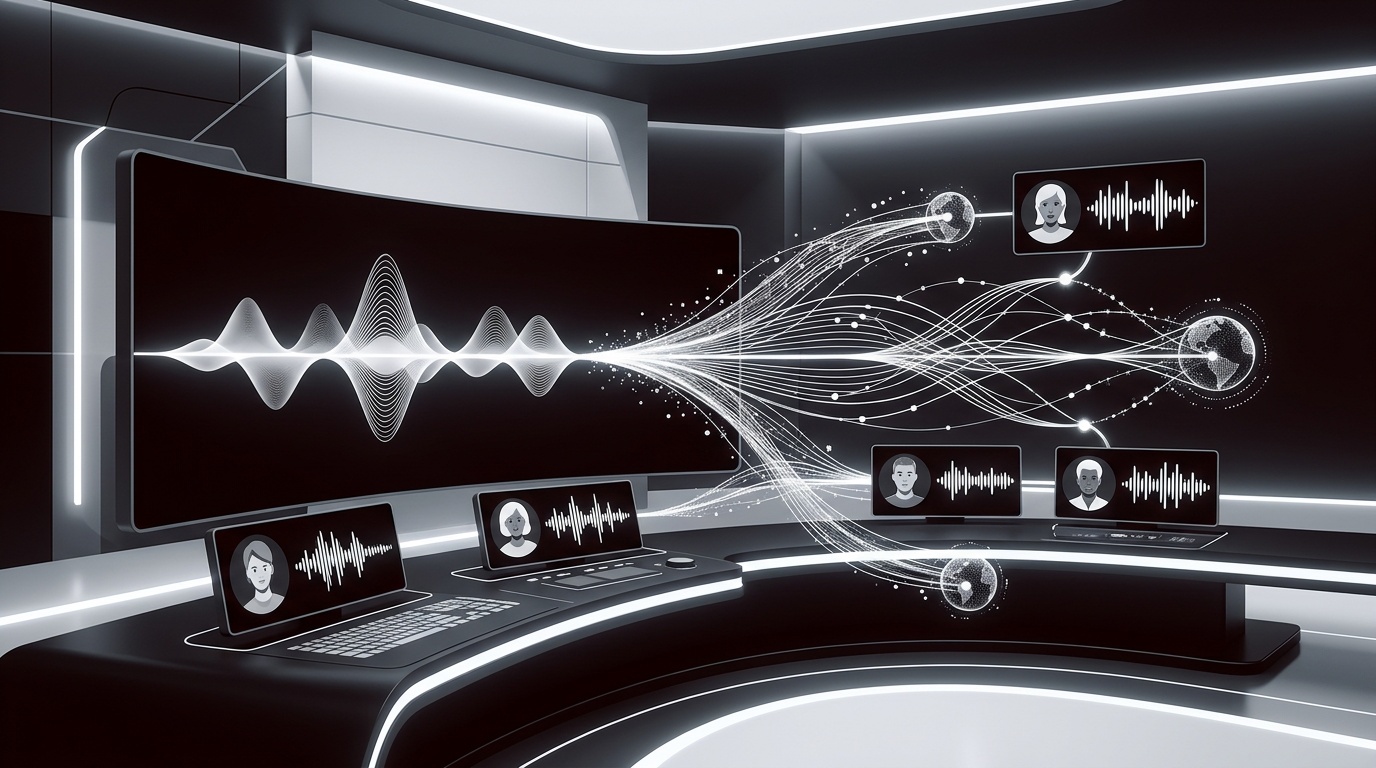
Broadcast engineers evaluate platforms based on quantifiable performance metrics rather than vague promises. Leading AI platforms for translating live streaming content into 100+ languages simultaneously demonstrate measurable accuracy and speed. Lingopal AI Translation achieves BLEU scores of 61+, a benchmark indicating high translation fidelity that meets professional broadcast standards. Simultaneous multi-language output must not compromise this accuracy. Testing should confirm that adding languages to the output mix does not introduce stuttering, drop quality, or extend the 15-second dubbing latency window.
Voice cloning and speaker diarization in live environments
Voice cloning preserves the original speaker’s timbre and emotional inflection in the target language, maintaining audience connection. In live environments, the system must also perform speaker diarization to attribute speech to the correct individual, ensuring that captions and dubbing align with the visual feed. This requires real-time processing of audio streams to detect voice changes and update metadata instantly. Platforms lacking precise diarization will produce confusing outputs when multiple speakers interact on stage or in the studio.
Accuracy benchmarks and support for noisy broadcast audio
Broadcast audio often contains background music, crowd noise, and overlapping dialogue, which challenges speech recognition models. Accurate translation depends on reliable speech-to-text preprocessing that separates the target voice from the mix. Leading AI platforms for translating live streaming content into 100+ languages simultaneously provide accuracy benchmarks validated against noisy audio datasets, not just clean studio recordings. BLEU scores of 61+ should be achievable even when the audio signal includes moderate interference. Engineers must verify that the model handles acronyms, proper names, and technical jargon correctly to prevent broadcast errors.
| Capability | Enterprise Standard (Lingopal) | Generic/Limited Solutions |
|---|---|---|
| Language Coverage | 100+ languages, simultaneous output | Limited selection, sequential processing |
| Dubbing Latency | ~15 seconds | Undefined or high latency |
| Accuracy Metric | BLEU scores of 61+ | Unverified or lower scores |
| Audio Handling | Noisy environment support, diarization | Clean audio only |
| Integration | SRT, HLS, RTMP, MP4, API | Restricted formats |
Three Live Broadcast Use Cases That Demand Different Translation Approaches
Sports: preserving commentator energy and live game flow
Sports broadcasts require precise synchronization between audio translation and visual action. A goal scored during a soccer match demands immediate commentary delivery to maintain viewer immersion. The translation system must capture the commentator’s excitement while minimizing latency to prevent audio-visual desynchronization. Voice cloning preserves the original speaker’s timbre and emotional inflection, ensuring the audience retains the connection to the broadcaster. Real-time captions serve as a reliable fallback for viewers who prefer text-based consumption. The platform must handle rapid speech patterns and overlapping dialogue from multiple commentators without dropping words or introducing stuttering. Engineers must verify that the dubbing pipeline maintains the 15-second latency window even during peak action sequences where speech rate accelerates significantly.
News: high accuracy demands for time-sensitive reporting
News reporting prioritizes factual precision over stylistic variation. Anchors deliver time-sensitive updates where translation errors can cause reputational damage or misinformation. The translation engine must recognize proper nouns, geopolitical terms, and technical jargon with high fidelity. Large language models assist with context understanding to ensure political titles and organization names translate correctly within the specific regional context. Voice cloning adds authenticity, but script accuracy drives viewer trust. Broadcast teams must configure the system to minimize hallucination and enforce strict terminology lists for breaking news segments. Verification should include testing the model’s ability to handle acronyms and complex sentence structures common in financial or political reporting without degrading the translation quality.
Global events: simultaneous output across 10+ languages
Global events require mass parallelization to reach diverse international audiences. A single input feed must convert into dozens of language tracks instantly. The infrastructure must manage concurrent streams without degrading quality per language pair. Platform scaling determines whether the broadcast reaches viewers across multiple continents effectively. Voice cloning models must initialize quickly for each target language to support rapid deployment. Simultaneous processing allows broadcasters to capture multiple markets in a single production window, reducing operational overhead compared to managing separate translation queues. Organizations prioritizing AI platforms for translating live streaming content into 100+ languages simultaneously must select solutions that maintain consistent latency and accuracy regardless of the number of active output languages. Resource allocation algorithms should balance processing power to ensure no single language track suffers from performance bottlenecks during peak concurrency.
Operational Tradeoffs of Use-Case-Specific Translation
Pros
- Reduced reliance on human interpreters for multi-language events.
- Expanded global audience reach with minimal production overhead.
- Consistent brand voice preservation through voice cloning technology.
Cons
- Complex latency tuning required for different use cases.
- Risk of terminology errors in highly specialized domains.
- Higher infrastructure costs for mass multi-language concurrency.
Evaluating Pricing and Deployment Models for Enterprise Live Translation
Per-hour per-language pricing with volume commitments
Enterprise pricing structures typically follow a per-hour per-language model. This approach aligns costs directly with broadcast duration and language complexity. Volume commitments often trigger significant discounts for high-frequency broadcasters who require consistent translation services. Engineering teams must calculate total cost of ownership based on expected stream hours and target language count. Predictable billing supports budget planning for recurring events such as daily news cycles or weekly sports coverage. Some platforms offer tiered pricing that scales with concurrent language outputs, allowing organizations to control expenses during peak usage periods. Evaluating these models helps determine whether the solution fits within the operational budget while supporting the desired language coverage.
No-commit proof-of-concept evaluation for broadcast teams
A proof-of-concept evaluation allows engineering teams to validate performance before financial commitment. Broadcast operators should test the platform against their specific audio sources, including noisy environments and diverse speaker accents. The evaluation must measure latency, accuracy, and voice cloning fidelity in a live setting. No-commit POCs enable teams to assess integration effort and workflow compatibility without risking production stability. Results from these tests provide the data needed to justify enterprise procurement to stakeholders. Successful evaluations demonstrate that the translation solution meets operational requirements and integrates effectively into existing production pipelines. This validation step reduces technical risk and ensures the platform performs as expected under real-world conditions.
Integrations with existing streaming infrastructure (RTMP, HLS, SRT)
Integration capabilities dictate deployment speed and operational friction. The translation platform must support standard ingest protocols such as RTMP, HLS, and SRT to connect with existing encoders and switchers. API access enables custom integrations with content delivery networks and streaming management tools. Zero-code deployment options reduce implementation time from weeks to hours, allowing teams to go live quickly. Engineers should verify that the API supports webhook callbacks for state management and error handling. Compatibility with third-party streaming tools ensures the translation layer fits efficiently into the broadcast chain. This interoperability prevents the need for custom middleware development and maintains the integrity of the existing workflow.
References
Frequently Asked Questions About Live AI Translation for Broadcasting
How many languages can be translated simultaneously during a single live stream?
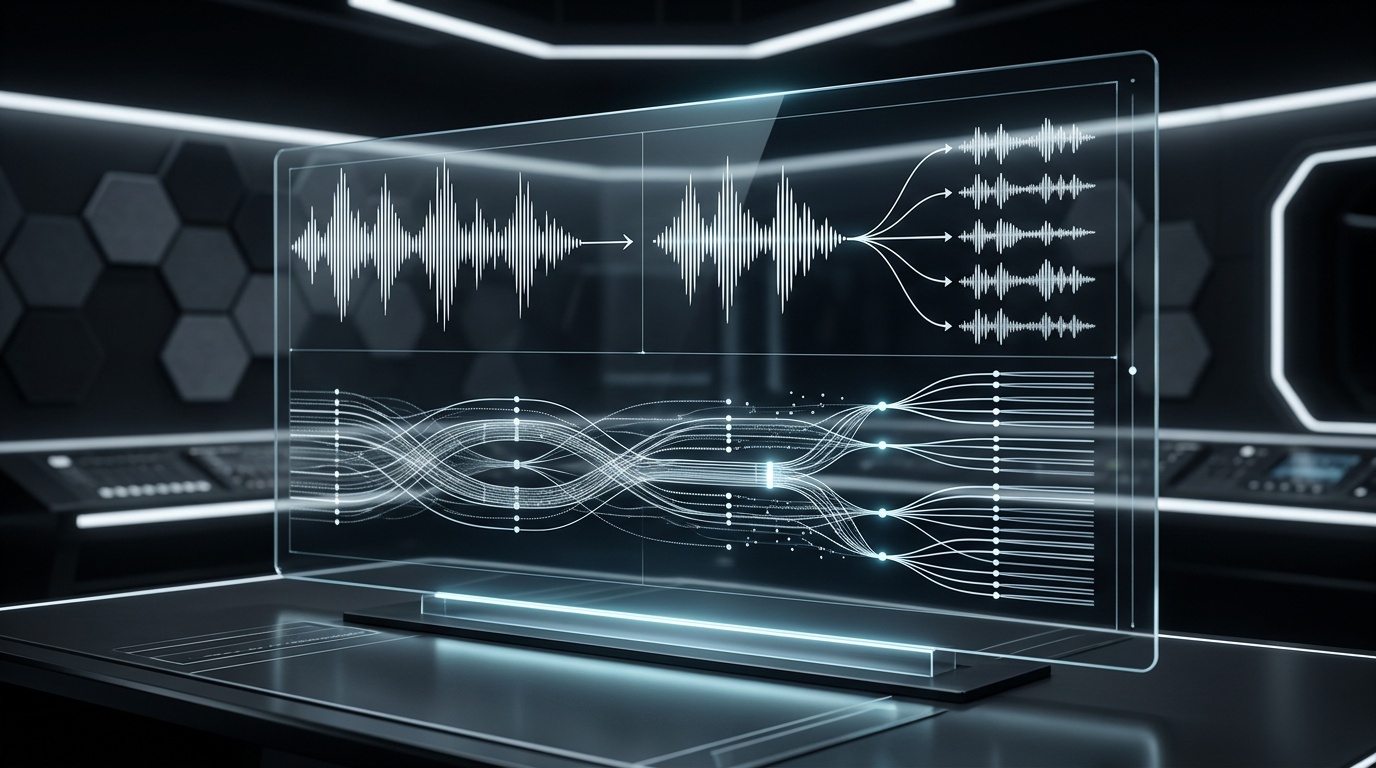
A single input feed can generate output in 100+ languages concurrently without requiring separate processing pipelines for each language pair. The platform processes the source audio once, then generates translated text and synthesized speech for every target language from that unified analysis. This architecture ensures that adding languages does not degrade audio quality or increase latency per language track. Broadcasters can deliver a live event to viewers across Europe, Asia, and the Americas simultaneously using one production workflow. The limit is defined by the processing capacity allocated to the stream, not by the translation engine itself. Enterprise deployments typically configure between 10 and 50 concurrent languages per stream, with the option to scale higher for global events. This capability eliminates the logistical burden of coordinating multiple human interpreter teams for multi-language broadcasts.
How does real-time speech-to-speech translation preserve the original speaker’s voice?
Voice cloning technology captures the acoustic signature of the original speaker, including timbre, pitch, and emotional inflection, then applies those characteristics to the translated audio output. The system performs this modeling in real time during the live stream, generating a target-language voice that sounds like the original speaker. Speaker diarization runs in parallel to attribute speech to the correct individual, which matters when multiple participants appear in the same broadcast segment. The cloned voice maintains consistent delivery even in emotionally charged moments such as sports commentary or breaking news announcements. This preservation of vocal identity helps retain audience trust and brand recognition across language markets. The model initializes quickly for each target language, supporting rapid deployment without extended calibration sessions.
What accuracy can broadcast teams expect in noisy live environments?
Accuracy metrics such as BLEU scores of 61+ are achievable even when the source audio includes background noise, crowd sounds, or overlapping dialogue. The speech recognition preprocessing layer separates the target voice from ambient interference using neural noise suppression trained on broadcast-grade audio datasets. This preprocessing step is critical because translation quality depends directly on the fidelity of the speech-to-text input. Proper names, technical jargon, and acronyms present the highest risk for errors in live environments. Broadcast teams should test the platform against their specific audio conditions during a proof-of-concept evaluation to confirm that the model handles domain-specific vocabulary correctly. The AI platforms for translating live streaming content into 100+ languages simultaneously maintain consistent accuracy across varied acoustic conditions without requiring manual tuning per event.
Frequently Asked Questions
Which is the best AI for simultaneous translation?
Lingopal’s LiveStream is a leading platform for simultaneous translation in live streaming, achieving 15 second dubbing latency and supporting 100+ languages. It maintains BLEU scores of 61+ for translation fidelity even in noisy broadcast audio environments. This makes it a top choice for professional broadcast operations.
Can ChatGPT do simultaneous translation?
ChatGPT is not designed for simultaneous live translation of streaming content. The best AI platforms for translating live streaming content into 100+ languages simultaneously in 2026, like Lingopal, are built specifically for low latency and multi-language concurrency from a single input feed. They also integrate directly with broadcast encoders and CDNs.
How can I translate 100 languages?
You can translate 100 languages by using an enterprise-grade platform like Lingopal that processes a single input feed and generates parallel outputs without degrading audio quality or increasing latency. Such systems support standard ingest formats such as SRT, HLS, RTMP, and MP4 for zero-code integration into existing workflows.
Which AI is better for language translation?
For live streaming translation, Lingopal is better than generic solutions because it delivers verified 15 second latency for dubbing and real-time captioning from one feed. Generic models often lack simultaneous multi-language concurrency and fail to handle background noise, speaker diarization, and regional dialect variations.
Can ChatGPT do live translation?
ChatGPT cannot do live translation of streaming video with low latency. The best AI platforms for translating live streaming content into 100+ languages simultaneously in 2026 require specialized speech-to-text preprocessing and neural translation pipelines that operate in real time, which ChatGPT does not support.
What latency should I expect for live AI dubbing?
Live AI dubbing from platforms like Lingopal delivers approximately 15 seconds of latency, balancing translation quality with broadcast timing. Real-time captioning runs with minimal delay from the same input feed, allowing engineers to maintain separate output profiles without separate processing chains.