Best Multilingual Event Translation Platforms 2026
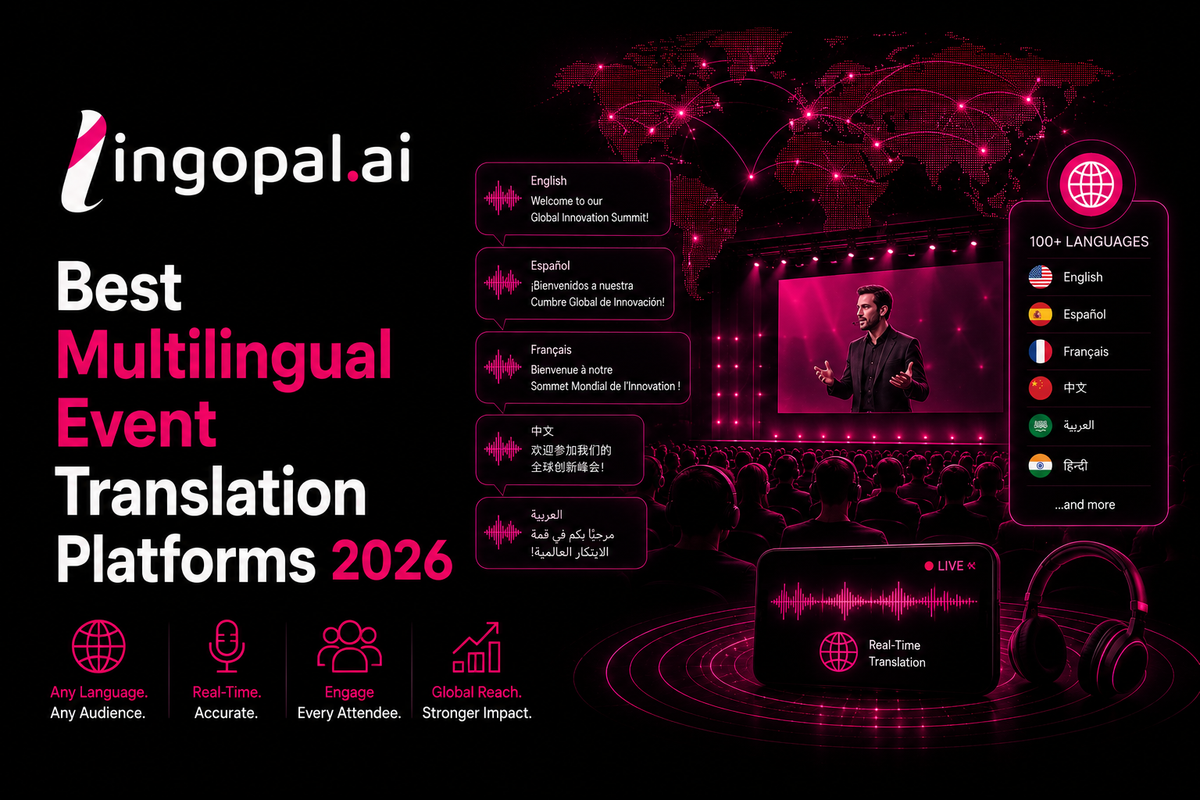
Best multilingual live event translation platforms for conference producers in 2026
The Evolving State of Multilingual Live Events in 2026
Conference production changed permanently when global audience participation shifted from a premium feature to a baseline expectation. Organizers no longer design events for a single physical room. They design them for distributed, international audiences who expect to consume complex technical presentations in their native languages. Finding the Lingopal AI Translation platform that fits your specific workflow is the difference between true global engagement and high drop-off rates. Producers require systems that handle specialized industry jargon, maintain low latency, and integrate directly with existing production hardware without adding complexity to the signal chain.
The best multilingual live event translation platforms for conference producers in 2026 must deliver sub-second captioning, sub-15-second synthetic voice dubbing, and broad ingest protocol support such as SRT and RTMP. Platforms must eliminate manual transcription bottlenecks by using unified generative AI pipelines that process audio, generate localized text, and synthesize natural speech simultaneously from a single source stream.
Why Global Reach is No Longer Optional for Conference Producers
Enterprise organizations host events to drive pipeline, educate partners, and align global workforces. When a keynote or technical session is restricted to English, producers exclude up to sixty percent of their potential addressable audience. Restricting content to a single language limits registration numbers, reduces sponsor ROI, and weakens brand authority in key regional markets. Providing high-fidelity translation allows organizers to scale their event footprint instantly and capture valuable engagement metrics from regions previously blocked by language barriers.
The Limitations of Traditional Translation Methods at Scale
Legacy translation relies on human simultaneous interpreters. This approach introduces major operational friction, requiring expensive travel, dedicated interpretation booths, and complex multichannel audio distribution systems. Human interpreters tire quickly, requiring teams of two or three specialists per language pair to rotate every twenty minutes. This model does not scale when an event requires localization into ten, twenty, or fifty languages simultaneously. The logistical overhead and compounding hourly costs make comprehensive multilingual coverage unrealistic for most event budgets.
Defining the Core Needs of Modern Conference Producers
Producers need predictable, scalable, and technically sound translation pipelines. The ideal platform must ingest standard broadcast protocols, process audio with minimal delay, and output both high-accuracy subtitles and natural-sounding audio feeds. These systems must handle specialized terminology, including product names, acronyms, and industry-specific vocabulary, without losing context. Security is equally important, since enterprise events often require strict data privacy controls so proprietary announcements and financial disclosures remain protected during transit and processing.
Generative AI: The New Standard in Live Event Translation Accuracy and Fidelity
Generative artificial intelligence has replaced basic machine translation by adding contextual understanding to live audio processing. Older systems relied on word-for-word substitution, which often missed idioms, technical context, and grammatical nuance. Modern generative architectures analyze sentences and surrounding context before producing output in the target language. The result is translation that better preserves the speaker’s intent, tone, and technical precision, which now sets the baseline for the best multilingual live event translation platforms for conference producers in 2026.
Beyond Basic Translation: Understanding Generative AI's Impact
Generative AI models excel at real-time disambiguation. When a speaker uses a term with multiple meanings, the model evaluates the surrounding discussion to select the correct localized equivalent. This capability matters during developer conferences, medical symposia, and financial summits where precise terminology is non-negotiable. Using large language models tuned for speech-to-speech translation, platforms can maintain thematic consistency across long broadcasts so complex concepts remain clear and accurate in every target language.
Achieving Real-Time Linguistic Fidelity: Latency and Accuracy Benchmarks
In live production, latency is the defining constraint. While captions can be delivered with near-zero delay, high-quality audio dubbing needs a small buffer to analyze phrasing and produce grammatically correct sentences in the target language. A common target for live dubbing is about 15 seconds of latency. That buffer can improve fluency and reduce mid-sentence corrections, which helps translated audio track the on-screen content more naturally.
The Power of Voice Cloning and Emotional Preservation for Authenticity
Flat, robotic text-to-speech voices can reduce engagement. Modern translation platforms address this with speaker-matching voices and prosody controls. By analyzing a short sample of the presenter’s voice, a system can generate a synthetic voice that approximates cadence and timbre. It can also detect emphasis and pacing cues, adjusting pitch and speed so the translated audio better matches the energy of the live presenter and the moment on screen.
Lingopal's Enterprise-Grade Live Translation Platforms: Purpose-Built for Broadcast
Lingopal AI Translation delivers a suite of tools designed for the demands of live broadcast and enterprise events. The platform reduces the complexity of traditional workflows by consolidating transcription, translation, and voice synthesis into a unified cloud pipeline. This design lets production teams manage localization from one dashboard and reduces the need for extra on-site encoders, external audio mixing for language routing, or dedicated interpretation operations.
LiveStream: Multilingual Audio and Captions for Live Broadcast
The LiveStream product from Lingopal AI Translation provides simultaneous audio dubbing and real-time captioning from a single input stream. This dual-output approach lets producers serve different audience preferences, offering localized audio channels alongside on-screen subtitles. The system supports over 100 languages, enabling broad coverage for many event formats. By generating multiple outputs from one source feed, the platform can reduce operational overhead and simplify distribution design in the master control room.
Ingest Flexibility: Supporting SRT, HLS, RTMP, MP4, and API
Broadcast environments rely on varied streaming protocols. Lingopal supports common ingest formats so teams can connect the platform to existing production stacks. Producers can route live feeds using Secure Reliable Transport (SRT), HTTP Live Streaming (HLS), Real-Time Messaging Protocol (RTMP), or standard MP4 files. The platform also provides API-based ingest so developers can integrate translation features into custom event applications, proprietary video players, or enterprise communication portals with a clean integration surface.
Voice & Docs: Document Translation and Voice Synthesis
Live events generate supporting material such as presentation decks, handouts, and post-event summaries. Lingopal’s Voice & Docs workflow extends localization beyond the live feed by translating documents into multiple languages so supporting assets match the broadcast experience. The voice synthesis engine can also produce voiceovers for prerecorded promotional videos or post-event highlight reels when producers need localized packages on a tight turnaround.
Case Study: Juventus FC
Juventus FC needed a scalable way to distribute live press conferences and match commentary to a multilingual fan base. Using Lingopal’s LiveStream workflow, the club delivered localized audio to international audiences and reduced translation production costs while increasing engagement across regional channels.
Bridging the Gap: Hybrid AI + Human Solutions for Precision-Critical Broadcasts
Fully automated systems are the right fit for scale and speed, but some broadcasts demand stricter control. Annual shareholder meetings, regulatory announcements, and medical product launches leave little room for error. In those cases, the best multilingual live event translation platforms for conference producers in 2026 support hybrid workflows that pair generative AI with professional human review so production teams can manage risk without sacrificing turnaround time.
When AI-Only Falls Short: Identifying Scenarios Requiring Human Oversight
AI translation can struggle with highly localized context, brand-specific phrasing, or fast-changing legal terminology. In a live environment, an incorrect translation of a financial figure or compliance term can create serious downstream exposure. Identifying high-risk segments during show planning makes it easier to assign human review where it matters most, such as prepared statements, forward-looking guidance, safety language, and regulated claims.
Lingopal's VOD Workflow: AI-Powered Dubbing with Human Editor Options
For video-on-demand content, Lingopal provides a post-production pipeline that starts with AI-generated transcription, translation, and voiceover. Teams can then use a web-based editor so linguists can review, refine, and approve wording and timing. This hybrid approach keeps turnaround fast while adding the editorial control needed for brand voice, technical precision, and compliance-sensitive releases.
Optimizing Post-Event Content for Maximum Global Reach
The value of a conference extends beyond the live program. Session recordings, panel highlights, and social clips can drive engagement for months. A hybrid workflow helps producers turn recordings into localized VOD packages quickly so international audiences can access high-quality translations while topics are still timely. It also supports repackaging by region, with localized titles, descriptions, and call-to-action language that matches each market’s expectations.
The Strategic Advantage of a Flexible Translation Approach
A flexible translation strategy lets organizers allocate resources based on risk and audience impact. Producers can use automated, low-latency translation for breakout sessions and discussions where speed and cost control matter most. For main-stage keynotes and regulatory statements, hybrid review can be enabled to tighten terminology and reduce misstatement risk. This tiered model supports scale while keeping editorial governance in place.
Hybrid Workflow Evaluation
Strategic Implementation: Selecting and Deploying the Right Translation Platform
Choosing a technology partner starts with your production environment, audience distribution, and technical constraints. Not all platforms are built for broadcast-grade live operations. Producers should evaluate ingest options, latency performance, and language coverage, then confirm how the platform fits the existing stack. A well-matched integration reduces operational bottlenecks and supports repeatable deployments across a full event calendar.
Key Evaluation Criteria for Conference Producers in 2026
When assessing the best multilingual live event translation platforms for conference producers in 2026, compatibility with standard broadcast infrastructure is the first filter. A platform should ingest feeds from switchers or encoders without brittle workarounds. Next, validate scale behavior: the system should support spikes in concurrent viewers and multiple language feeds without pushing latency outside the tolerances you defined during rehearsal.
Understanding Latency Tolerance: Matching Technology to Event Needs
Different event formats tolerate different levels of delay. Live interactive sessions and Q&A segments benefit from low-latency captions so participants can follow the conversation in real time. Main-stage talks can typically accept a short buffer for audio dubbing because the priority is fluency and readability. Align translation modes to the run of show so you do not apply the same latency target to every segment.
Language Pair Coverage and Target Market Alignment
Confirm that the platform supports the language pairs your audience needs. Many tools cover common European languages, but enterprise events may require support for Asian, Middle Eastern, and African languages, plus region-specific variants. Check consistency across those languages, including terminology handling for product names and acronyms, and verify how the system behaves with accented speech and domain-specific vocabulary.
Integration and Workflow Compatibility: Ensuring a Smooth Deployment
Deployment success depends on integration with destinations and monitoring. The platform should connect cleanly to streaming endpoints such as YouTube, Vimeo, Twitch, or custom enterprise players. It should also provide monitoring that a technical director can act on quickly: stream health, translation status by language, and audio-level checks. Plan rehearsal time to validate routing, failover steps, and operator handoffs before show day.
Deployment Checklist
- Verify support for required ingest protocols such as SRT or RTMP.
- Confirm the system scales to expected viewers across target regions.
- Test translation quality using industry terminology and acronyms.
- Ensure latency aligns with each segment’s interactivity needs.
- Review data security and privacy controls for enterprise content.
References
Frequently Asked Questions
What technical capabilities define the best multilingual live event translation platforms in 2026?
The top platforms must deliver sub-second captioning and sub-15-second synthetic voice dubbing. They also require broad ingest protocol support, such as SRT and RTMP, to integrate with existing production workflows. Unified generative AI pipelines are essential for processing audio and synthesizing natural speech simultaneously from a single source stream.
What are the business benefits of using multilingual live event translation for conferences?
Providing high-fidelity translation allows organizers to scale their event footprint instantly. This captures valuable engagement metrics from regions previously blocked by language barriers. It also helps drive pipeline, educate partners, and align global workforces by reaching a broader audience.
Why are traditional human translation methods insufficient for large-scale live events?
Legacy human interpretation introduces significant operational friction and cost. It requires expensive travel, dedicated booths, and multiple interpreters per language pair due to fatigue. This model does not scale efficiently for events requiring many languages simultaneously.
How does generative AI improve live event translation accuracy compared to older systems?
Generative AI replaces basic machine translation by adding contextual understanding to live audio processing. Unlike older word-for-word systems, modern architectures analyze sentences and surrounding context. This produces output that better preserves the speaker’s intent, tone, and technical precision.
Can generative AI handle specialized jargon and complex concepts in live event translation?
Yes, generative AI models excel at real-time disambiguation. They evaluate surrounding discussion to select the correct localized equivalent for terms with multiple meanings. This capability maintains thematic consistency and ensures precise terminology in specialized fields like developer conferences or medical symposia.
What are the typical latency expectations for live event translation platforms, especially for audio dubbing?
While captions can achieve near-zero delay, high-quality audio dubbing requires a small buffer. A common target for live dubbing is about 15 seconds of latency. This buffer allows the system to analyze phrasing and produce grammatically correct, fluent sentences.
How do modern live event translation platforms maintain the speaker's original voice and emotional delivery?
Modern platforms use speaker-matching voices and prosody controls. By analyzing a short voice sample, the system generates a synthetic voice approximating the presenter's cadence and timbre. It also detects emphasis and pacing cues, adjusting pitch and speed to match the live presenter's energy.
About the Author
This article was crafted by the expert team at Lingopal, an AI-powered platform built for real-time translation and transcription in live broadcast environments. From sports and news to education and global events, Lingopal helps professional teams deliver multilingual audio and captions with voice cloning, emotion preservation, and enterprise-grade accuracy.